Production-focused
We assess whether the agreed output is usable in the process, as well as whether the model looks right.

We start with the required result. We agree what information is needed, what we will develop, what you will receive and when you will review it.
We assess your enquiry and establish what further information is needed for a technical assessment, schedule or quotation.
Which source takes precedence? What needs developing? Who reviews the result? We establish this before work begins.
Where necessary, we use several review stages and a second-person check.
This depends on factors including project size, product type, repetition and the consequences of errors.
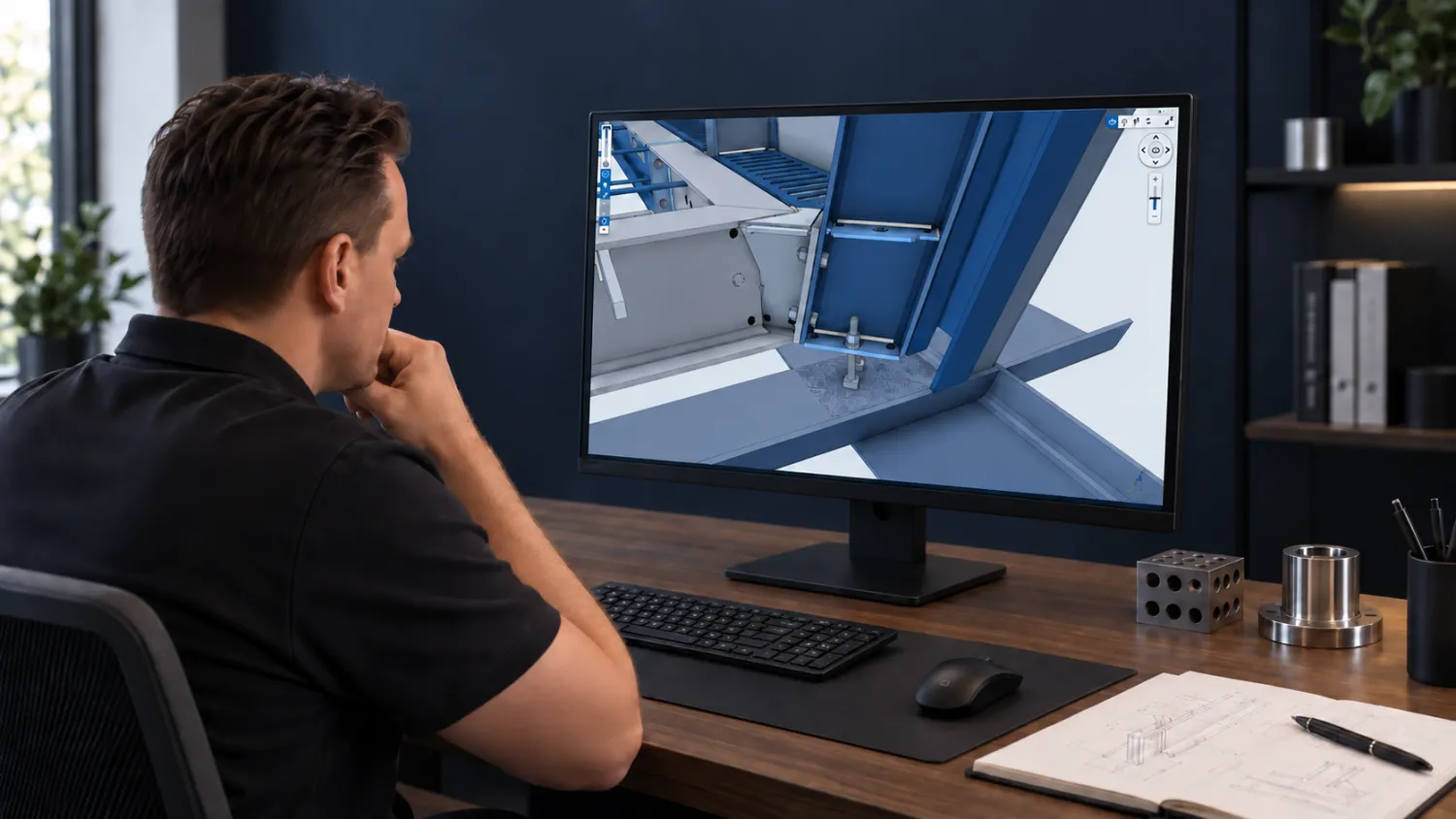
We select the reviewer based on the technical knowledge required and the risks involved.
We assess whether the agreed output is usable in the process, as well as whether the model looks right.
Where work recurs, we document rules and review points so they can be applied again.
Files, scope and open questions are visible at handover.
We first review your enquiry and the available information. We then discuss what further information is needed for a technical assessment or quotation.
The review method depends on complexity, risk, product type and the consequences of errors. We include additional checks where they add value.
Yes. Existing models, templates, libraries and agreements form the starting point where possible.
Organises the agreed development, checks within the agreed scope and hands over files and open questions.
Supply the agreed source information and product knowledge, and provide the reviews and approvals that belong within your organisation.
We establish what is inside and outside the assignment, who is responsible and how the result will be reviewed. For a change request, we first determine its impact on scope, price and schedule. Additional work is agreed separately in writing before it begins. Internal checking does not expand the assignment.
We manage projects from the Netherlands. Our team in Vietnam handles technical development, with Dutch capacity where needed. The technical knowledge required and the risks involved determine who checks the work.
Dimensions, manufacturability, tolerances, parts, holes and fits. Also the consistency between model, drawing, bill of materials and exports.
Parameters, product rules, representative variants and exceptions. Then the consistency between model results, drawings, BOM and exports.
Information, logic, access permissions, exceptions and error handling. With explicit checks on important decisions and external communications.
Briefly describe the issue. We’ll assess what you need and what information is still missing.
Ask a quick question